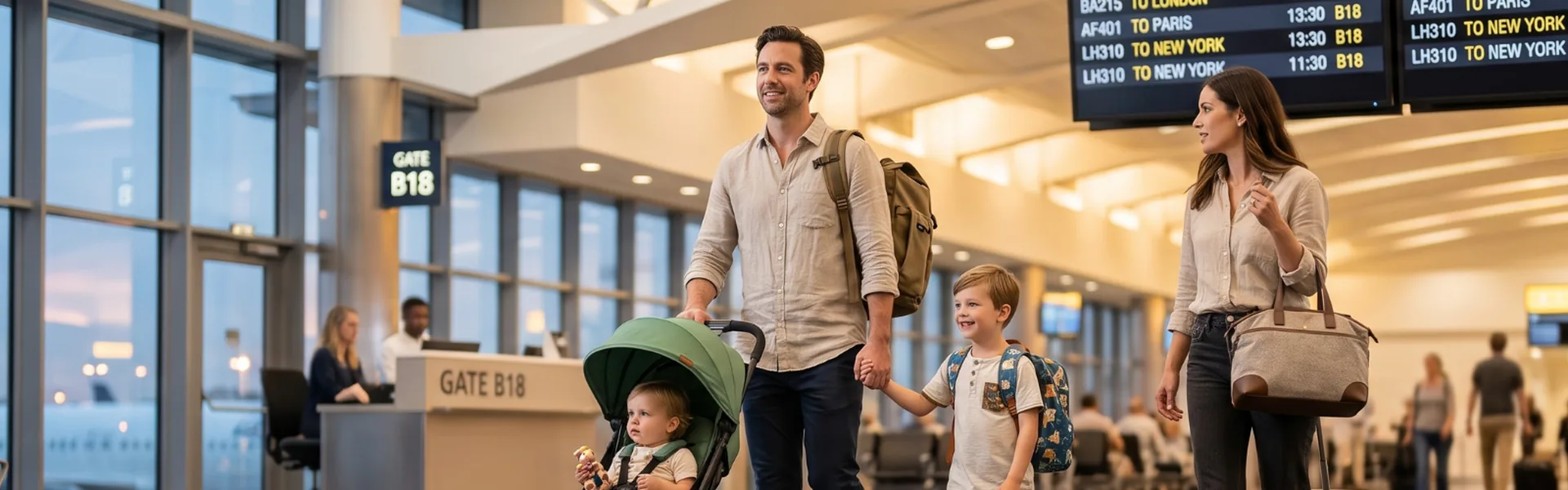
Carry-On Packing Checklist for Flying with Kids
What should I pack in a carry-on when flying with kids?
Pack travel documents, snacks, entertainment, one full change of clothes per child, a comfort item, and any medicine in the carry-on — never the checked bag. For infants and toddlers, add formula or breast milk, diapers, and wipes; TSA exempts these from the standard liquid limit. Publication date: August 14, 2026.
What goes in the bag decides how your flight feels from the moment you reach the airport. Good packing prevents the two things that stress parents most: not having what a child needs mid-flight, and carrying so much that security becomes a fight.
Travel Documents Kids Need to Fly
Real ID enforcement began May 7, 2025 for domestic flights — a Real ID-compliant license, passport, or another TSA-approved ID is required for travelers 18 and older. Every child needs a valid passport for international travel, even infants a few days old; processing routinely takes several weeks, so apply early. If one parent is traveling alone with a child, some countries and airlines ask for a notarized letter from the other parent or legal guardian authorizing the trip — confirm requirements with your airline and destination before departure.
TSA Rules for Formula, Milk, and Baby Food
The standard TSA rule caps carry-on liquids at 3.4 ounces per container. Formula, breast milk, toddler drinks, and baby food — including pouches and jars — are exempt, with no size or count limit for a reasonable trip length. Declare these items to the TSA officer at the start of screening and remove them from your bag for separate inspection. Ice packs, freezer packs, and gel packs used to keep them cold are allowed even partially frozen or slushy. Clear, translucent bottles screen faster than pouches, though pouches are still permitted.
Carry-On Checklist by Child's Age
What goes in the bag changes as kids get older. Use the list that matches your child's age, then add anything specific to your flight length or destination.
Baby (0–2)
- ✔Diapers and wipes — pack more than you expect to need for delays
- ✔Formula or breast milk in ready-to-feed portions
- ✔Two full changes of clothes for the baby, one for the parent holding them
- ✔Pacifier or comfort item, plus a spare
- ✔Small blanket and zip-top bags for soiled items
Toddler (2–5)
- ✔Snacks in resealable bags — crackers, fruit, dry cereal
- ✔Small toys, a coloring book, and triangular crayons that won't roll off the tray
- ✔Tablet loaded with shows plus child-sized headphones
- ✔Favorite stuffed animal or blanket
- ✔One full change of clothes; pull-ups if potty training
School-Age (6+)
- ✔Their own small backpack they can carry through security
- ✔Headphones for the seatback screen or a tablet
- ✔A book, handheld game, or travel journal
- ✔Snacks for the flight and a neck pillow for long-haul routes
- ✔A card with your phone number and flight details in their pocket
Strollers, Car Seats, and Gate-Checking
The FAA calls an approved car seat the safest place for a child on a plane — look for text on the seat reading "certified for use in motor vehicles and aircraft." Strollers and car seats go through X-ray screening at the checkpoint; carry your child through the metal detector separately. Most airlines gate-check strollers and car seats at no charge and return them on the jetway at your arrival gate — compact travel strollers small enough for the overhead bin can stay with you the whole flight.
In-Flight Tips for Ears, Meds, and Delays
Pack any medicine your child might need in the carry-on, never a checked bag — checked luggage is unreachable mid-flight if a fever or upset stomach hits at 30,000 feet. Sucking on a bottle, pacifier, or lollipop during takeoff and landing helps relieve ear pressure for babies and toddlers. Pack one extra change of clothes for yourself along with your child's, and add extra diapers and snacks beyond what the flight time requires — delays happen, and airports don't always stock family supplies.
Plan Your Next Family Trip with a Bilingual Advisor
Tell us your kids' ages, travel dates, and destination — our advisors help you plan flights, resorts, and cruises around what actually works for your family.
- 📞(888) 902-0978
- 💬WhatsApp +1 (786) 808-8683
- 🗣️English & Spanish
- 📍Miami, FL · Licensed ST45235